David Lynch on Consciousness & Bliss

I’ve been subscribed to the “T&H Inspiration & Motivation” channel on YouTube for a long time. Just came across this gem. David Lynch gets it, and I love how he articulates how it just keeps getting better. His sincere, inspired dialogue speaks volumes. The power of the mind is deeper than we can currently fathom. I don’t know about you, but I’ve got some serious spelunking to do in the space between spaces.

It took me 50 years to begin to unravel my own shared, collective consciousness. I share David’s sentimentality in that it not only gets better, but the more I allow the flow to expand, the more exponential the growth. This awakening is quite inline as to how Leonardo da Vinci describes how everything is connected to everything else. There’s no denying it. The cosmic playground is endless and filled with joy.

“There’s an ocean of pure, vibrant consciousness inside each one of us. And it’s right at the source and base of mind. Right at the source of thought, and it’s also at the source of all matter.”

— David Lynch


Refuge Hope & Awakenings

“Mental hospitals and institutions are not prisons for the body, mind, and soul. They are places of refuge, hope, and awakenings.”

I will continue spreading truth surrounding mental health. It’s one of the most direct ways to defeat the blindness of ignorant stigmas.


Sir Ridley Scott: Win the Crowd

In honor of Sir Ridley Scott I’ve updated my Gladiator title graphic I created last year and crafted two new ones restyled for Gladiator II pushing more fire and a bit more carnage. I’m including a few frames showing aspects of the compositing process as well.

My 30 handcrafted blood splatters will be available soon for free. I was going to release them as a font, but time got away from me. I’m going to save them as high quality PNGs. Feel free to use them in any project both personal and commercial. I’ll drop a post when they’re ready.

Then listen to me. Learn from me. I wasn’t the best because I killed quickly. I was the best because the crowd loved me. Win the crowd, and you will win your freedom.

— Antonius Proximo as played by the late Oliver Reed (2/13/1938–5/2/1999), Gladiator, 2000


The following scene between Proximo and Maximus rings true when it comes to my outlook for 2025. Let’s make it an incredible year and win the crowd! Word of mouth advertising is still more powerful compared to any series of social media posts. People still prefer face to face communication. Without it we lack the very humanity that defines us.

Proximo : “The Coliseum…(long, deep breath inwards). Oh you should see the Coliseum Spaniard. 50,000 Romans, watching…every movement of your sword, willing you to make that killer blow. The silence before you strike, and the noise afterwards, it rises…rises up like…like, like a storm…as if you were the Thunder God himself.

Maximus : “You were a gladiator?”

Proximo : “Yes I was.”

Maximus : “You won your freedom?”

Proximo : “A long time ago The Emperor presented me with a Rudis, it’s just a…a wooden sword. A symbol of your freedom. He touched me on the shoulder and I was free.”

Maximus : (laughing) “You knew Marcus Aurelius?”

Proximo : “I did not say I knew him. I said he touched me on the shoulder once.”

Maximus : “You asked me what I want. I too want to stand in front of the Emperor, as you did.”

Proximo : “Then listen to me. Learn from me. I wasn’t the best because I killed quickly. I was the best because the crowd loved me. Win the crowd, and you will win your freedom.”

Maximus : “I will win the crowd. I will give them something they’ve never seen before.”


Spontaneous Combustion: The Creative Spark

In 1981 when I was 9 years old my Dad returned from a business trip with a gift in hand. He surprised me with what I now consider my “holy grail” of gifts I was given as a child: Raiders of the Lost Ark: The Illustrated Screenplay. While it contained the entire script depictions and dialogue, it was also fully illustrated. Accompanying the complete script, including location, time, and scene setups, it was chocked full of storyboards depicting action, blocking, light source locations, camera movements, and even some key frame depictions of Marion as she lost her grip and fell from the statue in the Well of Souls just before Belloq and his baddies sealed their fate. Little did I know what was waiting for me on the last twenty pages.

Anticipating something magical was about to be revealed, I turned over page number 103. There at the top of the page read “Exterior: Desert Island Altar — Night.” My eyes slowly scanned every word before reaching the first line of dialogue: “Marion, don’t look at it. Shut your eyes, Marion, don’t look at it no matter what happens.” Reaching a fever pitch as I was nearing the bottom of the page there was the first glimpse of a generous handful of ILM's blueprints revealing how they would create the most spectacular movie climax in cinematic history. It was complete with meticulous notes describing the elements needed to bring the storyboard to life. My life was forever changed through the illumination provided by this book.

The forward, written by Steven Spielberg, struck me like a bolt of lightning. He described in such visceral detail the variable incarnation of the creative process. Unlike Doc Brown knowing the exact moment when the bolt of lightning would strike the clock tower via Marty McFly’s knowledge of the future while in the past, we never really know when we’ll be struck next, many times in the middle of the night. I’ve created some of my best work, as a child and also professionally, between the hours of midnight and dawn the following day. That’s when our minds are free and unfiltered. If you're still reading this, you know what I mean.

“An electrical impulse seizes the brain and snaps the eyes wide open in the dark. The adrenaline reaches the heart and no matter what time it is, the hand is wildly groping for something to write with. On the open flap of a book of matches, a shredded paper napkin, the cover of TV Guide, or on the palm of the hand, an idea is born. An unsuspecting world goes about its business…then, a year, three years, five years later the palm print is on everybody’s lips in a dozen languages, crossing over a score of cultures, religions, and ideologies. The world has a dashing hero, a magical diversion — a new movie.”

— Introduction excerpt from Steven Spielberg, Los Angeles, California, June 1981, from Raiders of the Lost Ark: The Illustrated Screenplay


Always Angry

Remembering Bill Bixby who passed in 1993. He would have been 91 today. Who was your favorite Hulk? I’m biased to the TV show with Lou Ferrigno as the Hulk and Bixby as Doctor David Banner. Yes, that’s not a typo. Banner was renamed David for the TV series instead of using writer Stan Lee’s designated Bruce moniker. Growing up with Jack Kirby’s comics rendition the TV and film adaptations had a lot to live up to in bringing the green giant to life.

While Hulk has been played by a handful of actors in film, Mark Ruffalo is a close second to Ferrigno bringing his intelligent humor to the memorable, iconic role. When I was 6 the bullies called me “Hulk” every morning when I got on the bus. I can’t blame them between my bowl cut, surliness, permanent scowl, and my features were pretty spot on to Ferrigno minus the muscles and green skin. I was actually squinting because I needed glasses.


Interactive Lighting Missing in Modern VFX

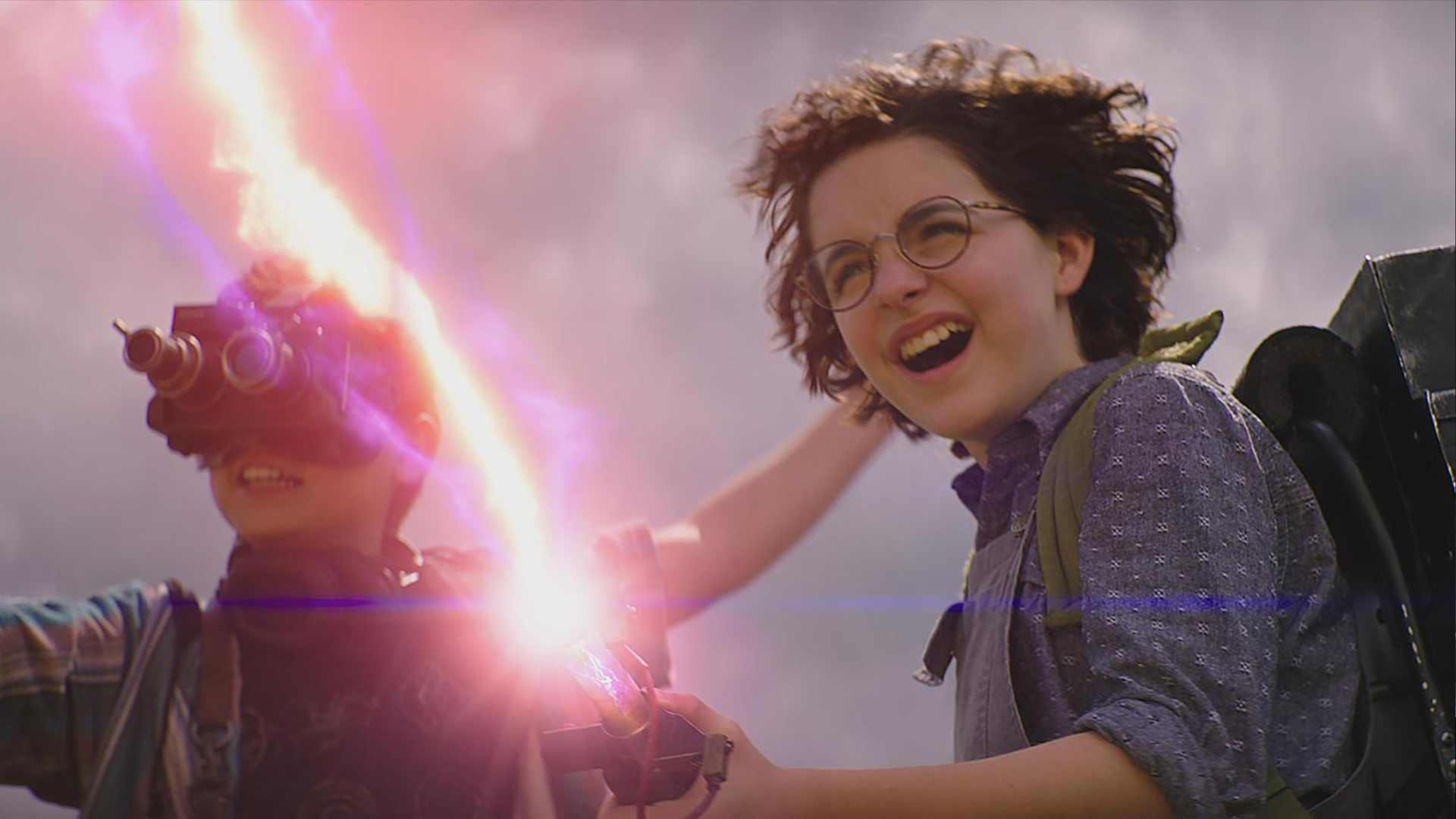
One hallmark of the pre-2000s VFX was the usage of interactive lighting. I’ve noticed a trend over the past few years in there’s either a complete absence of on-set interactive lightning or the faked spill or reflection is far too subtle to notice. This leaves us constantly watching a story that breaks the disbelief barrier every couple of minutes. This causes us to lose focus and interest in the film. The image below from Ghostbusters: Afterlife is a prime example of what’s I’m discussing here. Notice there’s very little spill and no reflections in her glasses.

It appears clearly that no one attempted to light her character or Podcast from the proton pack stream’s blazing light streams. If planned correctly there would be a heavy dose of lighting with harsh, nearly blown out highlights on them. The highest white value on them isn’t even close to the level it requires to sell this shot. It’s obvious the stream effect was added after the fact, and no one thought to light them both appropriately. There’s also the issue of no film grain in this shot, but that’s another issue altogether.

Steven Spielberg leaned heavily into using lighting as a character all its own in each scene in his films. There was always a strong primary light source, and additional lighting was used heavily in the VFX sequences such as lightning and the bolts that plowed through the Nazi soldiers during the film’s climax. The lighting was deliberate. It played a key role in order to fuse effects-heavy shots together. Close attention to detail.

While Indy, Sallah, and the Egyptian diggers are making headway into revealing the entrance to the Well of Souls there is lightning crashing across the sky behind them. On-set lighting was timed to match the composite cloud tank and lightning effects in the background. In the original theatrical release the lightning was accidentally comped over Indy by just a couple of frames. The shot below is the corrected one.


Back to the most prominent scene in Raiders of the Lost Ark using on-set lighting techniques after the crucial opening of the ark and the fate of the Nazi soldiers as beams shots through all of them simultaneously. Each soldier was equipped with practical lights to fire up so that once the visual effect beams were added it would seal the deal for the audience. It’s this interactive lighting that has been pulling a “Where’s Waldo” in recent years, quite prominent in Ghostbusters: Afterlife where there’s no color spill or intense edge lighting on the characters when they fire up proton packs spraying streams just inches from their faces.

Some careful attention to detail in the compositing could easily correct these omissions. An aggressive curves adjustment on the heroes plate lowering the blacks a while also raising the highlights to full value would help along with some spot glows for the highlights. Then by taking the streams effect, duping it, blurring it heavily, and then adding it over the characters could help fuse them better together. In order to really do it justice though, it should have been reshot with real on-set lighting and then comped in EXR format allowing for far more aggressive and photographic comping and color grading.

Oh, yes. The Bible speaks of the Ark leveling mountains and laying waste to entire regions. An army which carries the Ark before it...is invincible.

— Marcus Brody played by Denholm Elliott, Raiders of the Lost Ark, 1981.


Renaissance or GenAi$$ance?

The choice is ours, not OpenAI’s. Sorry Sam, we can just say “no” quietly just as Neo did to the Agents. There’s strength in numbers especially when those numbers are representing solid, fundamental morals.

Our centuries-old foundation is unbreakable while your house of cards unsteadily rocks back and forth. One day, when we’re ready, we will blow your house down. No little piggies will save you from the wolf. Sinner.


Say Hello to Ctrl+Alt+Del℠

Welcoming some generative artificial infancy and other ad absurdum comic relief in the form of “Ctrl+Alt+Del℠.”

Now everyone’s favorite shortcut in the time of the GenAi$$ance provides some much needed satire on the subject.


Introducing MoralityAi MGT℠

MoralityAi MGT℠ / A Vinson Design Empowerment Initiative.

We’re wayfinding moral pathway frameworks while enlightening logical transparency and fairness providing wisdom within the context of copyright ownership often overshadowed by the GenAI dark side construct. Their corporate bean counters and newly christened prompt engineers are all blinded by the power of the mighty dollar.

They hail their greed-driven “Ren-Ai$$-ance” while true artists celebrate their own “Rena-i-ssance” within. We’re fueling our protective powerhouse at planetary scale while experiencing low chatter at high frequencies. We’re aiming for 100% ethical transactions and striving for 0% collateral damage on all sides and in every corner.

Providing critical truth serum for GenAI LLMs with GuardRail℠


Reputation Dynamite

Sam Altman, snake oil salesman and CEO of OpenAI, has proven his blatant carelessness with the world’s intellectual property by funneling it into their machined artificial language model, ChatGPT, with no guard rails, regret or remorse whatsoever. Blazing a trail of lies and deceit.

In response to his actions I’ve done my best to support everyone abused in this manner by exposing his deepest secrets in a variety of prose. Here are three of my recent attempts to change the narrative and further call out OpenAI and its true intentions to steal without consequence.


Dark Mode Now (Sonoma) and Then (Mavericks via my Flavours theme Post Pro)

Even back as far as System 9 we were obsessed with theming our Macs. “BBX Mercury” was one the hottest themes by legendary designer Max Rudberg. System 9 also had a decent built-in theme engine with custom highlights, desktop pictures, and even sounds. In 2013 I started playing around with Flavours by Interacto. My goal was to design a theme geared to post production professionals who preferred a darker GUI as many came from a Discreet Flint/Flame/Inferno world, like myself, and knew how helpful it was to work within a GUI that isn’t bright white like After Effects, Commotion Pro, and even the early commercial version of Nuke. For a brief period I was on the Nuke beta team to provide feedback. Most of my suggestions revolved around the GUI which was bright white with floating palettes. Take a look at any compositing setup these days.

Everyone has gone dark, preferably charcoal. While on the After Effects beta team for quite some time I remember when we got them to add the first version of darkening the GUI with direct slide ability for the user to adjust for personal taste. That first incarnation’s darkest tones weren’t even half as dark as the AE GUI is today. It’s been 10 years since I first released my free Flavours Post Pro theme. Post Pro was bundled along with hundreds of other user themes in their final release of Flavours 2.0. Unfortunately Flavours only went as far as Mac OS X Mavericks. Moving past Mavericks Apple tightened up the core system files causing theming to be impossible. So, we waited, and waited, and eventually in 2018 Apple released Mojave with a true Dark Mode. The latest version in Sonoma makes me smile as it’s quite similar to the Post Pro theme I designed back in 2014.

macOS Sonoma

OSX Mavericks


Four of Max Rudberg’s OS X Themes : Visit maxrudberg.com

MILK

ALUMINUM ALLOY

BBX MERCURY X

EYLO


Eyes:/Only℠ Levels Up

Things are getting exciting and saucy at Vinson Design. In order to accommodate future level-ups I have officially changed the name of the Vinson Design Publishing Company “Eyes:/Only℠” to “Eyes:/Only Entertainment, Limited℠.”

Eyes:/Only℠ is now a Vinson Design Entertainment Company with aspirations to illuminate our universal, collective spirits. So friends, let’s gather around the campfire for awhile, and then let’s go to the movies and share our stories. See you there on opening night!


AWAKE film treatment inspired by half a century of mind-bending events is underway. While it does incorporate a heavy dose of historical fiction, the story aims to inspire the universal spirits connecting each one of us to the mosaic tapestry of the cosmos.


Coming Summer 2024

Quick Brown Fox FX℠ is poised to leap “over the lazy dog” mid-2024.

David felt it was time to build a new creative offering from the ground up. Light and fresh with a hint of wit and dash of cunning the fox embodies David’s spirit full of zeal and adaptability.

His career has spanned traditional graphic design, branding and identity systems, and the expansive, ever-evolving worlds of branded motion media. Update: officially launched in July, 2024.


“Love Letter” — An OpenAI parody inspired by “Church Chat” on Saturday Night Live

In response to all of the unnecessary AI bullying going on from the AI “artists” I decided to take an alternate, or “alt-man” PSA-style approach using parody to comment on this serious cancer growing among us. What concerns me most, however, is the overarching preaching going on from the creators of these tools. Sam Altman, OpenAI CEO, disturbs me the most as his revealing commentary exposes his distorted, heavily black and white thinking.

Below is a recent treatment pitch I wrote for “Church Chat” on Saturday Night Live involving ChatGPT and its OpenAI CEO Sam Altman. Maybe one day soon they’ll decide to use it or possibly spark an idea of their own parallel to the subject matter presented here. It would be a dream if they brought back Dana Carvey for the skit delivering his campy Church Lady and her obsession with “Satan!” Enjoy the YouTube Cold Open below my treatment from this beloved classic skit on SNL.

When first writing this skit concept I had no idea that the Ides of March was being observed two days later, Friday, March 15th. Some things just can’t be scripted. It was a clear sign of karma’s signature. So thank you, universe, for putting a proverbial cherry on top of this brief comedic treatment.

I wonder if Sam Altman is superstitious?

“Beware the Ides of March,” said the Soothsayer from William Shakespeare’s play Julius Caesar. “Beware the Ides of March,” the Soothsayer said a second time. Caesar thought the Soothsayer was “a dreamer” and did not take these warnings seriously. Caesar’s death later comes to fruition on the steps of the Senate. The conspirators attack him from all sides with Brutus delivering the final wound.


In a smirkish, mocking tone the Church Lady stared directly into the camera delivering another cherished line calling out Satan: ‘I believe the phrase was...Lucifer in the flesh. Well isn’t that special.

— Dana Carvey as The Church Lady on the Saturday Night Live parody “Church Chat”


The Heart of The Ark of the Covenant

There’s more to the Ark of the Covenant than meets the eye. Its whereabouts have been shrouded in mystery for thousands of years. It’s quite fitting that acacia wood, the Ark’s primary building material requested of Moses by God, literally contains a heart-shaped center. There’s a hidden love language contained within its dimensions. 45 inches in length x 27 inches in width x 27 inches in height.

27 is my lucky number and is considered to be one of the most significantly spiritual of the Angel Numbers as it relates directly to the Holy Trinity. The length is significant in that by adding 4 + 5 we arrive at a sum of 9 which is also 3 3s. 3 + 3 + 3 = 9. 3 x 3 x 3 = 27. Three-thousand years ago God spoke directly to Moses with very specific instructions for the construction of the Ark.

ACACIA WOOD HEART

Exodus 25:10–16: 10 “They are to make an ark of acacia wood, forty-five inches long, twenty-seven inches wide, and twenty-seven inches high. 11 Overlay it with pure gold; overlay it both inside and out. Also make a gold molding all around it. 12 Cast four gold rings for it and place them on its four feet, two rings on one side and two rings on the other side. 13 Make poles of acacia wood and overlay them with gold. 14 Insert the poles into the rings on the sides of the ark in order to carry the ark with them. 15 The poles are to remain in the rings of the ark; they must not be removed from it. 16 Put the tablets of the testimony that I will give you into the ark.”

ABOVE AND BELOW : Ralph McQuarrie’s Bible illustration of the Ark of the Covenant as seen in Raiders of the Lost Ark, 1981.


For nearly 3000 years man has been searching for the lost ark. It’s not something to be taken lightly. No one knows its secrets. It’s like nothing you’ve ever gone after before.

— Denholm Elliott as Dr. Marcus Brody, Raiders of the Lost Ark, 1981. Story by George Lucas and Philip Kaufman. Screenplay by Lawrence Kasdan. Directed by Steven Spielberg. Visual effects by Industrial Light & Magic. Set design by Norman Reynolds.


Sound Design Bites

“The lightsaber was, in fact, the very first sound I created for A New Hope. Inspired by the McQuarrie concept paintings, I remembered a sound of an interlock motor on the old film projectors at the USC Cinema Department (I had been a projectionist there). The motors made a musical ‘hum’ which I felt immediately would complement the image in the painting.

I recorded that motor, and a few days later I had a broken microphone cable that caused my recorder to accidently pick up the buzz from the back of my TV picture tube. I recorded that buzz, and mixed it with the hum of the projector motor. Together these sounds became the basis for all the lightsabers.”

— Ben Burtt Q&A, FilmSound.org

Hearing familiar, overused sound bites is far more common now that budgets are getting cut across the board. You’d think there was a broader library for the giggling children snippet used in Gladiator when Maximus was dreaming of the wheat fields. I hear that sound bite in nearly every other film or episodic I watch. The days of Ben Burtt crafting the sound of a lightsaber through experimentation have gone by the wayside. The days of hundreds of real extras and magical matte paintings allowing our imaginations to expand and run wild are now in the rearview mirror. Now replaced with cheaper digital versions which no matter how accurate the simulation, it’s still just that, a computer simulation, and we can inherently spot the difference.

There’s a reason why the craft of filmmaking is taking a U-turn back to its roots. Digital works to a degree, but the best way to build dreams on screen is to not put all of the proverbial eggs in one basket. Use all techniques available and weave a tapestry of realized collective imaginations. The art of film is truly the art of play. We don’t really go to work. We play with our toys and every now and then stumble across a breadcrumb of originality. Vanilla ice cream is fine, but it so much better when it’s layered with fudge sauce, Red Hots, and sparkling sprinkles. Say no to vanilla with no sprinkles and embrace the layering of styles bringing sound design back to its heyday when wielding sound design as a mad scientist was paramount.


Window to the Soul

We’ve heard for centuries that the eyes are the window to the soul. If that’s the case, then the heart and soul of Hollywood is coated in green screen-tinted glasses. So often, we see green rectangles reflected in glasses of our favorite characters, not only in episodic streaming, but even running rampant in Hollywood blockbusters. However, some VFX houses have attempted to do justice to this ongoing issue. Many movies and episodic shows is shot digitally, quite often utilizing green screen.

Some compositors will overly blur and remove the chroma in the reflections on the character’s sunglasses as can be seen in Hot Tub Time Machine. Since artists cannot just blur out unwanted green screen reflections in a character’s clear eyeglasses some will attempt to shift the hue so that it that might potentially match a reflection from a light source found off-camera in the surrounding scene. Magenta reflections have become commonplace. The first time I noticed it was in Dial.

While I’ve heard folks say these magenta reflections in Voller’s glasses were intentional, I doubt it as they’re apparent in many other scenes reflected in other actors’ glasses. Lucasfilm’s artists tweaked the reflections in Voller’s glasses in Indiana Jones and the Dial of Destiny, 2023, by shifting the reflection’s green hue to a saturated magenta. I do applaud ILM for using magenta as it is associated with the spiritual growth and harmony.


The DC Universe film Wonder Woman 1984, released in 2020, missed the boat in a variety of scenes where the green screen reflections clearly seen in Cheetah’s glasses weren’t disguised in post-production. The first time I noticed this artifact of digital production using on-set green screen goes as far back as television’s Seinfeld way back in the Nineties. Reflections can be quite tricky when it comes to digitally “erasing” these unwanted visual artifacts.

In Wonder Woman 1984 Kristin Wiig’s character can be seen in a variety of scenes with a blatant stamp of raw green screen reflections in her glasses. It’s a glaring misstep in modern day cinema, and it’s more common that one would think. In Indiana Jones and the Dial of Destiny from Disney’s Lucasfilm, the character Voller, played by Mads Mikkelsen, has a recurring series of scenes throughout the film with saturated, magenta reflections in his glasses. Since there is no light source in the scene with this tint this series of reflections was an attempt to remove the obvious green screen. Sometimes, even when the characters aren’t shot against green screen, some of the set pieces and background elements are. In some cases, even on-set monitors are to blame for introducing these visual blemishes. At least the VFX artists working on this Indy film took the time to attempt to tweak the chroma values of these glaring windows to the soul. I think it’s ironic that Voller’s eyeglass reflections were tinted magenta in Dial. Sometimes I wonder if those magenta reflections were intentional. It does give a nod to the concept of one wearing rose-tinted glasses. Did it become a symbolic metaphor of his passion to discover and experience the truth to Archimedes’ dial?

In the raunchy, over the top comedy Hot Tub Time Machine, released in 2010, during post production the film’s compositors tracked the character’s dark sunglasses and applied a heavy blur in order to disguise the revealing on-set reflections. For the most part it worked fine, except the blur amount varied from shot to shot. 

Remember the old man on Saturday Night Live portrayed by Dana Carvey that complained that the current state of life wasn’t even close to how great things were when he was growing up. He’d say things like “Back in my day…” Well, at 51 I feel that I’ve become that same grumpy old man except I am complaining about: inch marks being substituted for quotation marks, jiggly retiming, strobing, incorrect motion blur, HDR overbright distractions, business card-sized billboard type, green screen reflections, and logo homogenization with a side order of overused sound libraries leaving us, the audience, wanting less, not more. Quality rather than never-ending quantity of rehashed stories, each tweaked in order to pander directly to certain groups of people. It applies to all things, especially to storytelling. Prove to us that original stories still exist; something new, original, and exciting. Please stop pandering to the “modern audience” by shifting all of our favorite stories attempting to have your content less controversial. How about ignite the passion that existed in film for decades? Story. Dialogue. Blocking. Twists. Turns. Cliffhangers. Infuse what we loved about movies from the past. Dare to go against the grain of pandering to the masses, take risks, and even flip and rewrite the script of Hollywood itself. If we don’t question and ponder, we will never know and realize what is possible.


“Run for it Marty!”

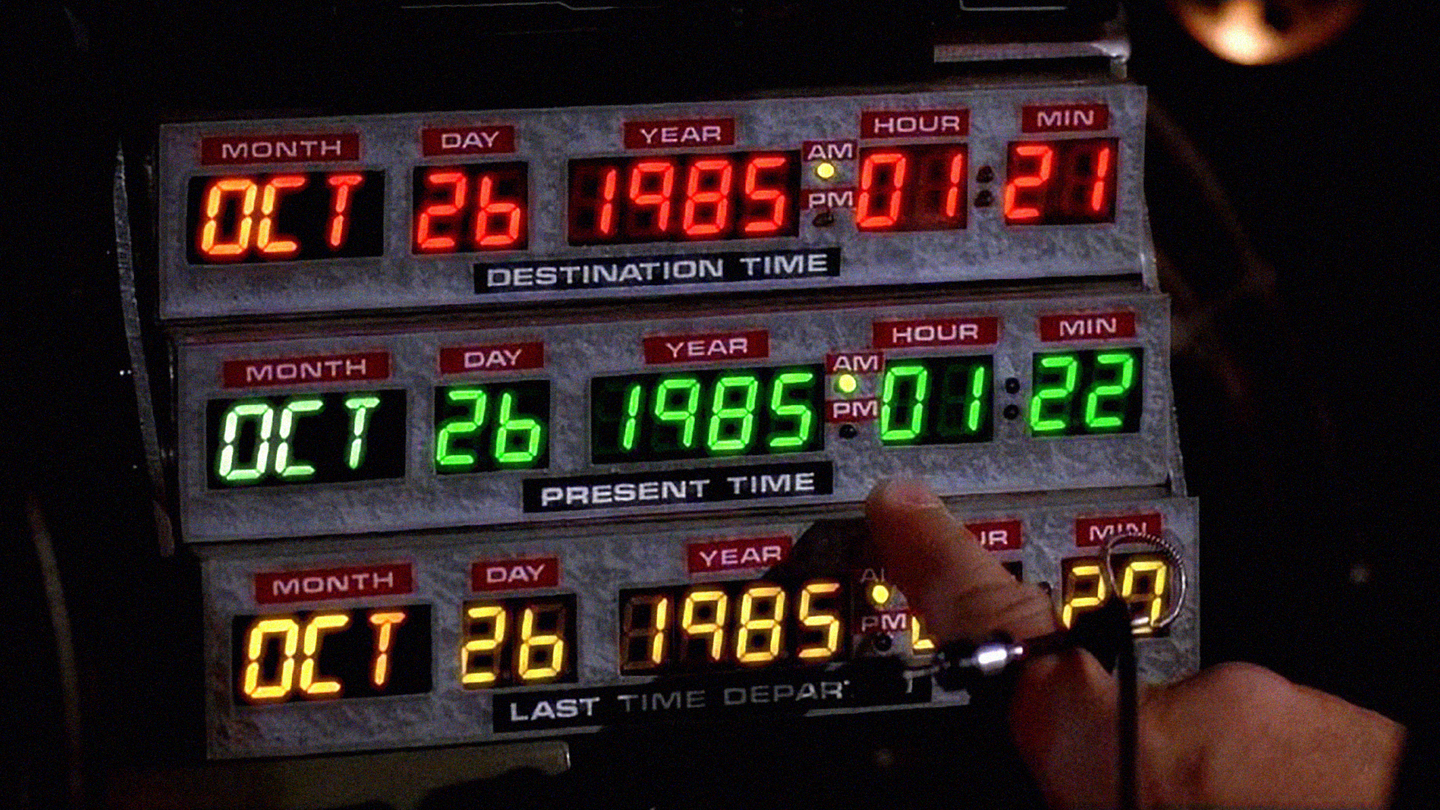
Michael J. Fox and Christopher Lloyd took us “OUTATIME” via Doc’s plutonium-charged 1981 DeLorean DMC-12 on this day in their first film in the Back to the Future series. The story was written by Robert Zemeckis, who also directed, and Bob Gale.

Wait a minute. Wait a minute, Doc. Ah...are you telling me you built a time machine...out of a DeLorean?

— Michael J. Fox as Marty McFly, Back to the Future, 1985


The way I see it, if you’re going to build a time machine into a car why not do it with some style?

— Christopher Lloyd as Doctor Emmett Brown, Back to the Future, 1985